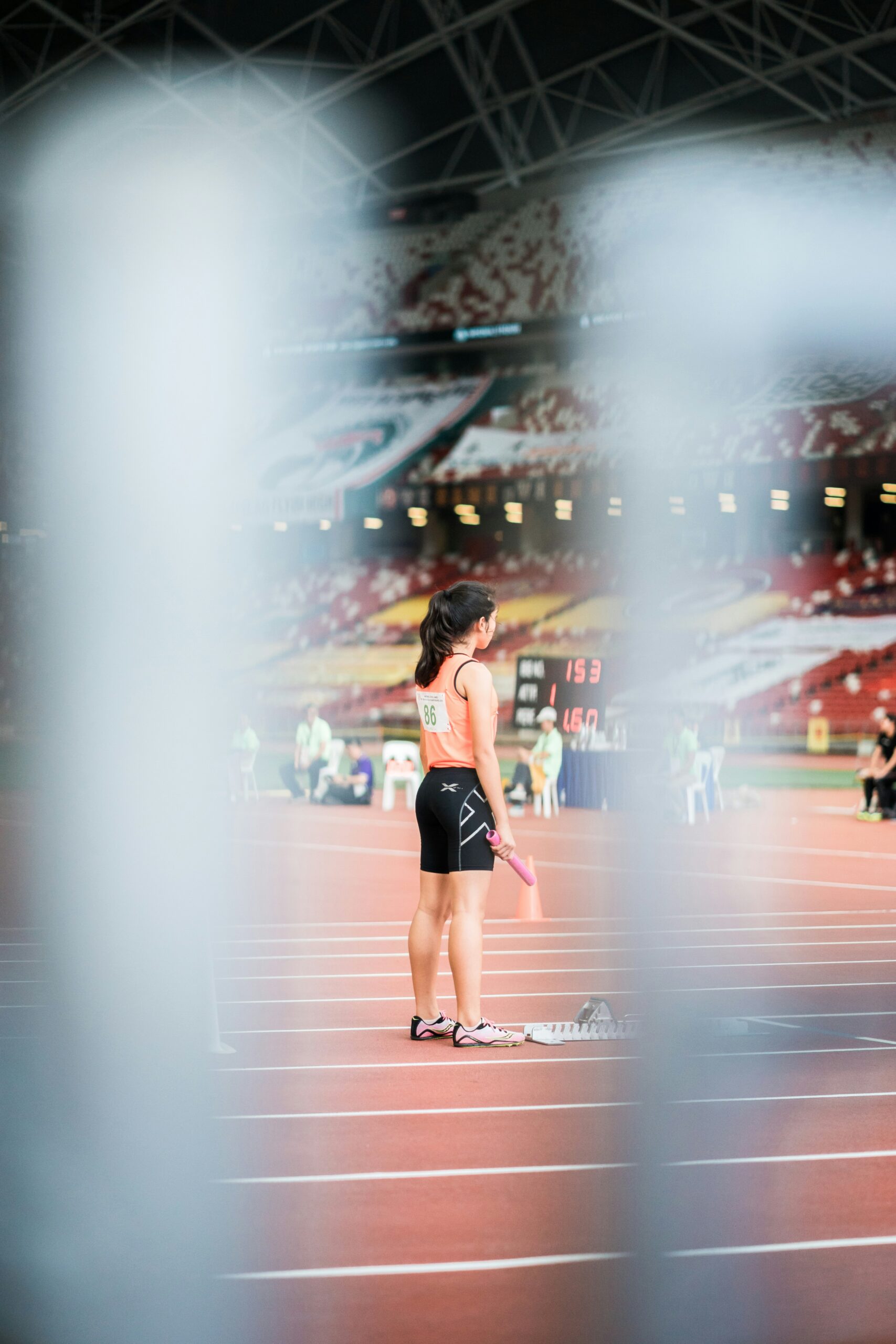
What outcome-focused mental rehearsal actually does to your brain — and what works instead.
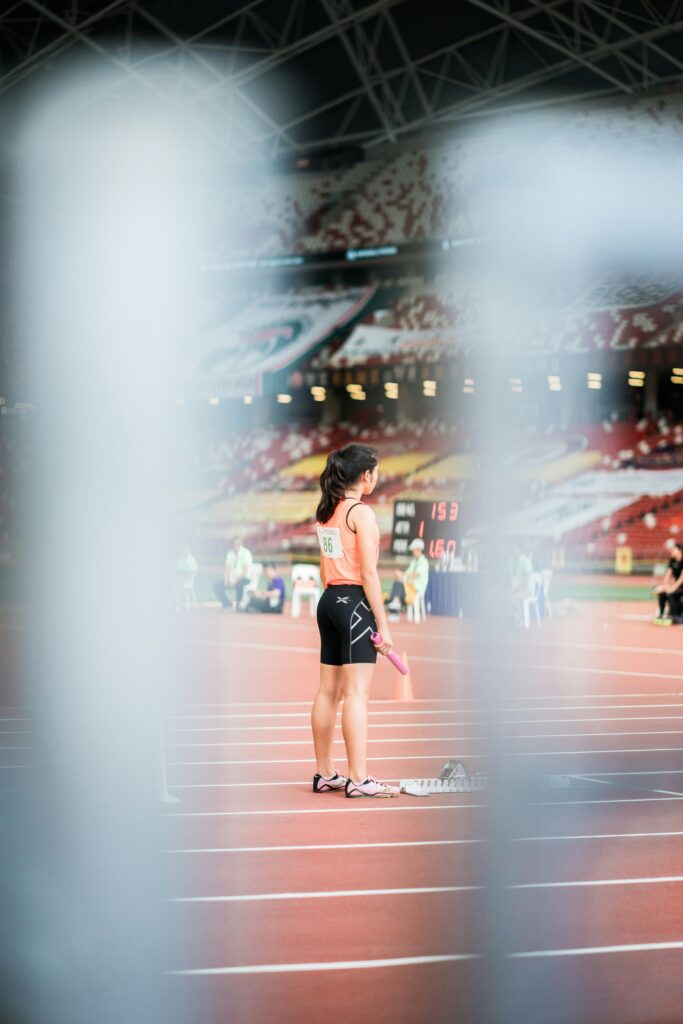
You’ve been told to picture yourself winning. So you do. Eyes closed the night before competition. The finish line. The shot dropping. The medal. You see it all.
Then competition starts and you tighten up.
You’re not weak. You followed the advice. The advice is the problem.
Most visualization teaches athletes to picture the outcome. Crossing the line. Winning the game. Hitting the shot. The research says this is exactly the wrong thing to rehearse.
What Happens in Your Brain When You Picture the Win
Your brain has one job older than any other: keep you alive.
A small part of your brain called the amygdala scans for threats every second. When it senses danger, it floods your body with stress hormones. Your breathing shortens. Your muscles tighten. Blood moves away from fine motor control and toward big survival movements.
Your brain can’t tell the difference between a real threat and a moment you’ve trained it to treat like one.
Picture winning a hundred times and your brain learns one thing: the result is everything. Your nervous system codes the upcoming competition as a moment that cannot go wrong.
Then competition arrives. Your nervous system does what it was trained to do. It tightens, narrows, and protects.
You’re not choking. The system is doing exactly what you trained it to do.
Why Visualization Still Works — When You Do It Right
Visualization is real. Decades of brain research confirm it.
Imagining a movement turns on nearly the same brain regions as actually doing it (Hétu et al., 2013). Pianists who practice only in their heads show brain changes similar to pianists who play the keys (Lotze et al., 1999). Mental rehearsal builds real neural pathways.
But how you visualize decides whether it helps or hurts.
Research on the PETTLEP Model— the most studied imagery framework in sport psychology — shows imagery only transfers to performance when it matches the conditions of real competition. Same body position. Same environment. Same emotional texture. Same timing (Holmes & Collins, 2001; Smith et al., 2007).
Sitting on your couch picturing a medal isn’t rehearsal. It’s fantasy.
And fantasy has a cost.
When your visualization stays focused on outcomes, three things happen.
You tie your identity to the result. Every rep raises the stakes.
You skip the hard parts. Fantasy glides past fatigue, doubt, mistakes, pressure — so when those show up in real competition, your nervous system has no script. This is the same gap most athletes hit between practice and competition.
You practice from fear. Every rep becomes a plea: please let this happen. You teach your brain that the goal is to avoid failure, not to be present in pursuit of something meaningful.
That’s the quiet ruin. A slow training of your nervous system to read competition as threat.
Want the protocol I actually use?
The Freedom Visualization Protocol is a free 7-day guide that walks you through the daily practice — five to eight minutes a day, no apps, no audio, no fluff. It’s the same protocol I run with the athletes in my practice.
What Actually Works: The 80/20 Shift
The athletes who hold up under pressure don’t rehearse outcomes. They rehearse presence. Instead of the medal, they rehearse the experience of competing fully — fatigue, doubt, mistakes, all of it.
I call it the 80/20 split with the athletes I see.
Eighty percent of your mental practice trains presence. You picture yourself in the experience. Feet on the track. Hands on the bat. Sound of the crowd. Breath. You rehearse being there — not winning there. Research on mindfulness-based approaches in sport consistently shows that present-moment focus outperforms outcome-focused training for reducing competitive anxiety and getting into flow (Gardner & Moore, 2012).
Twenty percent rehearses adversity. Not to scare yourself. To build a recovery pathway. You picture the moment your legs burn at mile 18. The missed shot. The wave of doubt. Then you practice your response. One breath. One cue word. Back to the task.
That 20% is the most overlooked piece in mental performance training. Adversity will show up in real competition. Your nervous system needs a rehearsed answer — not a pep talk.
This is the same protocol I run with every athlete I see. A high school swimmer. An NCAA baseball player. An ultrarunner at mile 70. The skill is the same. Train presence. Train recovery. Trust the process.
Compete From Freedom, Not Fear
Outcome visualization trains you to compete from fear.
Process visualization trains you to compete from freedom.
One narrows you. The other opens you up.
You can’t control outcomes. You never could. But you can train your nervous system to recognize the moments that matter most as familiar — not as threats.
The pressure won’t go away. You don’t need it to.
Ready to rebuild your mental rehearsal?
→ Download the Freedom Visualization Protocol — the 7-day guide I use with competitive athletes.
→ Working on something specific? Book a free 15-minute consultation. I see athletes in person in Monument, Colorado and virtually nationwide.
Dr. Trent Claypool is a licensed sport psychologist and the founder of Summit Sport Psychology. He works with competitive athletes from high school through professional levels, specializing in performance anxiety, the practice-to-competition gap, and the science of competing from freedom.